


How to keep a car logbook for tax as a sole trader | FY 26-27
If you use your car for work, keeping a vehicle logbook could be worth hundreds (or even thousands) at tax time.
Article contents
− +- Introduction
- Why should I keep a vehicle logbook?
- How does the ATO logbook method work?
- What logbook formats does the ATO accept?
- Can I use one logbook for multiple vehicles?
- ATO logbook method vs cents per kilometre method: Which should I use?
- Free ATO vehicle log book template for sole traders
- Other common questions about the ATO logbook method we hear from sole traders
- The easiest way to keep a logbook for tax for FY 26-27
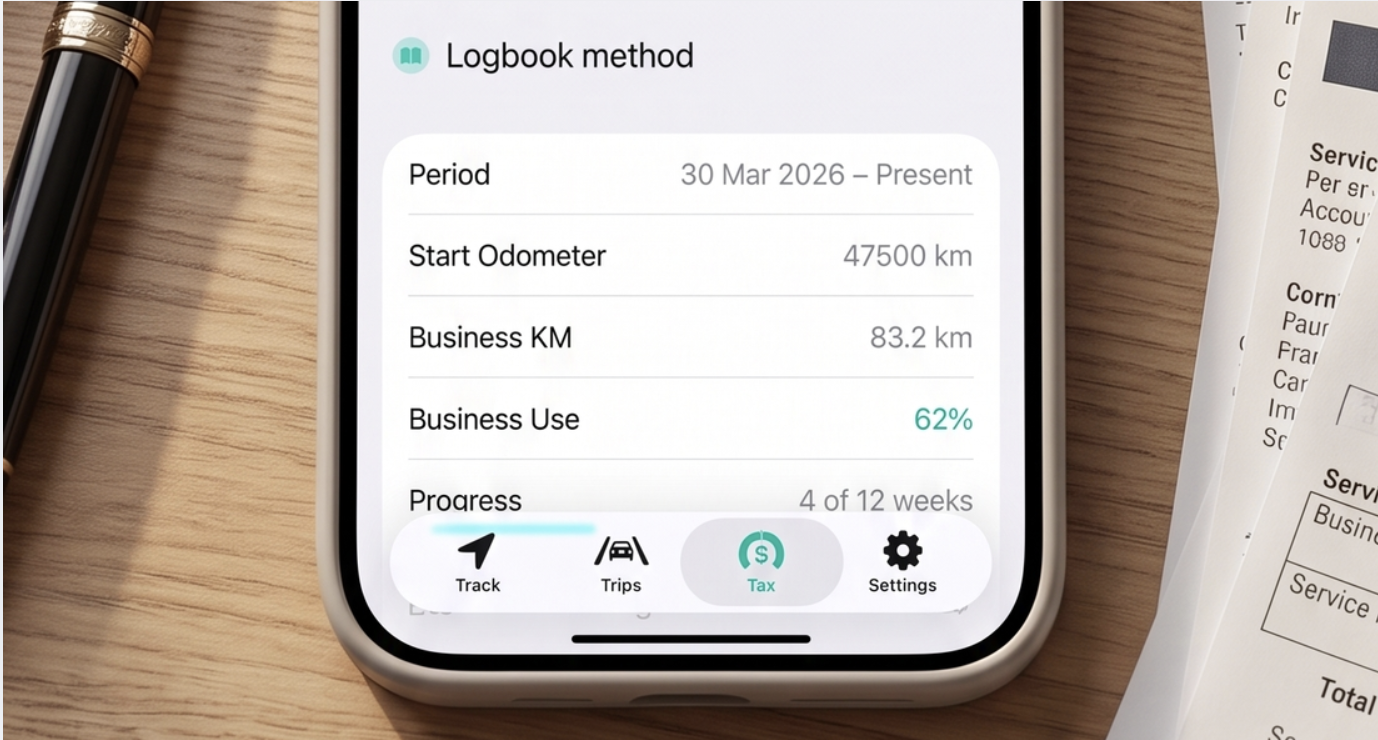
It's the only ATO-approved method that lets you claim the actual cost of running your vehicle, rather than a fixed rate per kilometre.
But plenty of sole traders either don't keep a logbook at all, or keep one that won't hold up under scrutiny.
This guide explains exactly how to use the ATO logbook method for claiming car expenses, and how to make the whole process as painless as possible.
We've also put together a free ATO car log book template to help you get organised for the 2026-27 Financial Year.
Note: This article is general in nature and based on Australian Taxation Office guidance as of July 2026. For advice specific to your circumstances, always speak to a registered tax agent or accountant.
Why should I keep a vehicle logbook?
Sole traders are allowed to claim the business portion of car expenses as a tax deduction.
The ATO gives you 2 ways to calculate that deduction.
1. Cents per kilometre method
This is the simplest way to claim vehicle expenses. No receipts required, just proof of your business travel.
The downside is the cap of 5,000 kilometres per year (91 cents per km for 2026-27, giving you a maximum deduction of $4,550).
If you drive further than that for work, or if your actual vehicle running costs are higher, you might want to look at the second method of calculating your deduction.
2. Logbook method
This lets you claim a percentage of your actual car expenses (fuel, servicing, registration, insurance, and depreciation) based on how often you drive for business. No kilometre cap.
When to use this method:
You drive more than 5,000 business kilometres a year
Your car running costs are relatively high (newer vehicle, high fuel use, regular servicing)
You use your car heavily for client visits, site visits, or other business travel
You want to claim depreciation on your vehicle
How does the ATO logbook method work?
Step 1: Keep a logbook for a continuous 12-week period
This period should be representative of how you use your car across the full year.
What to record in your log book
The ATO requires you to include certain things to ensure your logbook is compliant.
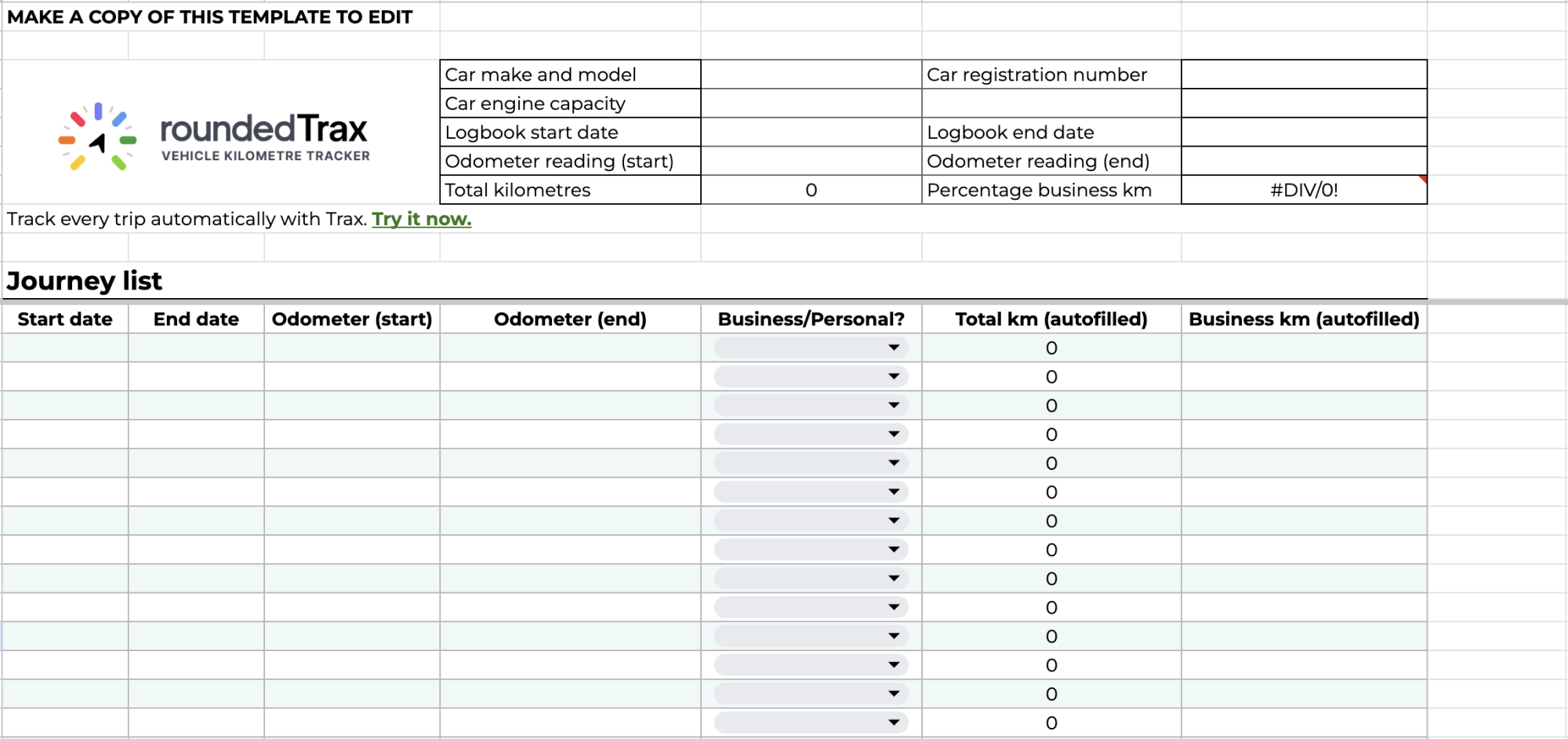
For the 12-week logbook period, make sure you include:
The start and end dates of the period you're tracking
Odometer readings at the start and end dates
Total kilometres driven during that period
Business-use percentage
Make, model, engine capacity, and registration number of the vehicle
Odometer readings at the start and end of each subsequent income year you use the logbook for your tax return
For each individual trip:
Start and end date of the journey
Odometer readings at the start and end of the journey
Kilometres travelled
Purpose of the trip (business reason, or note if personal)
If you make 2 or more journeys on the same day in sequence, you can record these as a single trip entry in your logbook.
Step 2: Calculate your business-use percentage
You can do this by dividing your business kilometres by the total kilometres you drove in that time, then multiplying by 100.
If your vehicle is used for both business and personal purposes (the case for most sole traders), your logbook must clearly show which trips were which.
What counts as business use?
Travelling between your home office and a client site (where home is your principal place of business)
Visiting clients, customers, or suppliers
Travelling between two separate business locations
Attending business-related conferences or training
Collecting business supplies or equipment
What doesn't count as business use?
Commuting from home to a regular fixed workplace (this is private use)
Personal errands, even if you make a quick work-related stop
School runs, holidays, or any personal travel
Step 3: Apply your business-use percentage to your total car expenses and claim your deduction
This will include expenses like:
Fuel and oil (actual costs, or estimated from odometer readings)
Registration and CTP insurance
Comprehensive insurance
Servicing and repairs
Tyres
Interest on a car loan (if applicable)
Depreciation (decline in value)
You can only depreciate up to the car cost limit set by the ATO each year ($69,674 for 2025-26). If you paid more than this for your vehicle, your depreciation calculations should use the capped amount, not the purchase price.
Add up your total expenses, multiply by your business-use percentage, and that's your deduction.
Example:
If your logbook shows you drove 6,600 kilometres for business out of 11,000 total, your business-use percentage is 60%.
If your total annual car expenses (including depreciation) come to $9,000, you can claim $5,400 as a deduction.
What logbook formats does the ATO accept?
The ATO accepts logbooks in any format, provided you include all the right information.
You can use:
A physical pre-printed logbook (available at most news agencies and stationery suppliers)
A spreadsheet (such as Excel or Google Sheets, maintained consistently)
A manual logbook app (such as the ATO's own myDeductions tool in the ATO app)
An automatic kilometre tracker and logbook app (such as Rounded Trax)
Your accounting software if it includes a mileage/logbook feature
Whatever format you use, the records must be complete, accurate, and available if the ATO asks to see them.
Can I use one logbook for multiple vehicles?
To claim expenses from 2 or more cars using the logbook method, you need a separate logbook for each vehicle, and the logbook period must cover the same 12-week window.
Choose a 12-week period that reflects representative use across all vehicles, not just one.
ATO logbook method vs cents per kilometre method: Which should I use?
You should always speak to your accountant to know for sure, but here's a quick breakdown.
Logbook method | Cents per kilometre | |
|---|---|---|
Record-keeping | 12-week logbook + receipts for all expenses | Evidence of business km travelled |
Kilometre cap | No cap | 5,000 km per year |
Rate (2025–26) | Based on actual costs | 91 cents per km |
Maximum deduction | Based on actual costs × business % | $4,550 |
Depreciation | Yes, claimable | Included in the flat rate |
Best for | High business km or high running costs | Low business km or simple situation |
Valid for | Cars only | Cars only |
The simplest way to decide: if your vehicle is expensive to run or you drive a lot for work, do the numbers.
Calculate what you'd get under both methods and choose accordingly.
Once you've kept the logbook, you're not locked in. You can choose how you want to claim any work-related car expenses when you lodge your return.
Protip💡 Get a logbook app like Rounded Trax that automatically records trips using both the ATO logbook method and the cents per km method, so you can easily compare at tax time.
Free ATO vehicle log book template for sole traders
Fill this logbook template for each trip during the 12-week period.
If you make multiple trips in sequence on the same day, you can combine them into one entry.
Want an easier way to keep a logbook?
Fill your logbook automatically with Rounded Trax. Every trip is recorded for you, with all the info you need to claim your car expenses.
Try Trax freeOther common questions about the ATO logbook method we hear from sole traders
Can I use the logbook method for any vehicle?
The logbook method applies specifically to cars, which are defined by the ATO as motor vehicles (excluding motorcycles) designed to carry fewer than nine passengers.
This includes most passenger vehicles, SUVs, and utes under 1 tonne carrying capacity.
For vehicles that aren't cars under the ATO definition (like motorcycles, heavy utes, or commercial vehicles) you can't use the logbook or cents per kilometre methods.
You must claim actual expenses, apportioned between private and business use using a diary or journal.
Can I start my logbook at any time of the year?
You can start a new 12-week logbook period at any point during the income year, as long as it falls within that year.
The only exception: if you start using your car for business fewer than 12 weeks before 30 June, you can continue the logbook into the following income year to complete the full 12-week requirement.
The period you choose should reflect your typical travel patterns. If you have a seasonal business or a period where travel is unusually high or low, you'll want to start your logbook another time.
Do I need to keep receipts to claim car expenses if I’m using the logbook method?
Yes. Unlike the cents per kilometre method, the logbook method requires you to keep evidence of your actual expenses. That means:
Receipts or invoices for fuel, servicing, insurance, registration, and repairs
Your loan statements if you're claiming interest
Records supporting your depreciation calculation
For fuel specifically, you can either keep actual receipts or maintain odometer readings that support an estimate of fuel costs.
As for everything else, keep your receipts for at least five years from the date you lodge your tax return.
How long is my car log book valid for?
A logbook is valid for five years from the year it was kept.
You don't need to redo it every year, but you do need to record your odometer readings at the start and end of each income year while the old logbook remains in use.
What if my business use changes?
If your driving patterns shift significantly (e.g., you move to a home office, change the nature of your work, or acquire a new vehicle), you'll need to start a new logbook in order to claim your motor vehicle expenses on your next tax return.
Can I use the logbook method if I lease my car?
Yes. The ATO allows the logbook method whether the vehicle is owned, leased, or obtained under a hire purchase agreement.
Can I use the logbook method if I have an electric vehicle?
The logbook method applies to EVs in the same way as petrol or diesel vehicles. You'd claim the business percentage of your charging costs, registration, insurance, servicing, and depreciation.
What if the ATO audits my vehicle claim?
If audited, you'll need to produce your original logbook, the supporting receipts, and your odometer records. The ATO may question whether your logbook period was representative of the year, so choose those 12 weeks carefully.
Logbook apps with GPS records tend to be more robust in audit situations than handwritten books.
Do I need to tell my accountant I'm using the logbook method?
Let your accountant know each year, and provide them with your business-use percentage, total expenses, and supporting receipts.
If you use Rounded to track your expenses throughout the year, you can easily give your accountant access so they can review these records themselves
What if I use my car for both my sole trader business and a regular job?
You can claim the business use related to your sole trader work, but you'll need to separate that from any work-related travel connected to your employment. Keep clear notes in your logbook about which trips are for which purpose.
The easiest way to keep a logbook for tax for FY 26-27
If you're not tracking every business trip, you'll pay more tax than you need to. We built Rounded Trax to fix that.
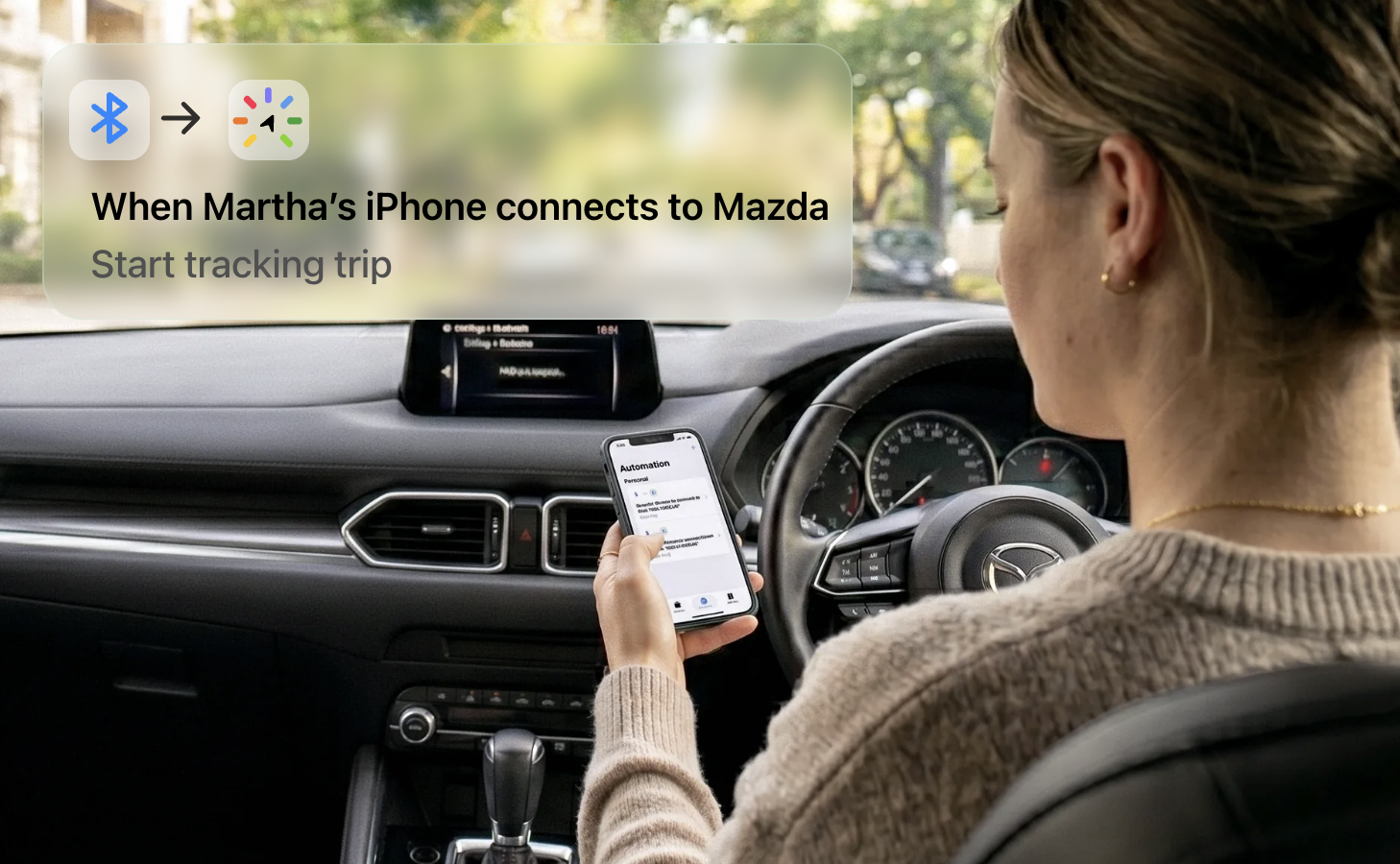
The moment your phone connects to your car via Bluetooth, CarPlay, or Android Auto, tracking starts. No hardware needed.
And because Trax knows when you're actually driving your vehicle (not just moving), you won't end up with phantom trips from trains, Ubers, or a mate's car cluttering your logbook.
Best of all, you can connect Trax with our sole trader invoicing and accounting app, so you can see tax deductions in real time and keep everything organised in one app come EOFY.
Download Trax today to get 20 free trips and see how much more you could get back next year.
Contents
Join newsletter
ABOUT ROUNDED
Invoicing and accounting software for sole traders. Get paid faster and relax at tax time.